Alukönigstahl
Contact
AKS Login
Projects we support

Steel for ship building

A ship is loaded for as long as it is at sea. The sea state never repeats itself, the machinery runs below, and salt water finds every surface that is not protected against it. Above all of that sits a rule set that decides in advance which steel may be built into which part of the vessel.

We supply hollow sections and tubes for railings, masts, gangways, outfitting and yard equipment, together with the laser processing, cutting and bending that bring a part to the geometry a curved deck asks for.
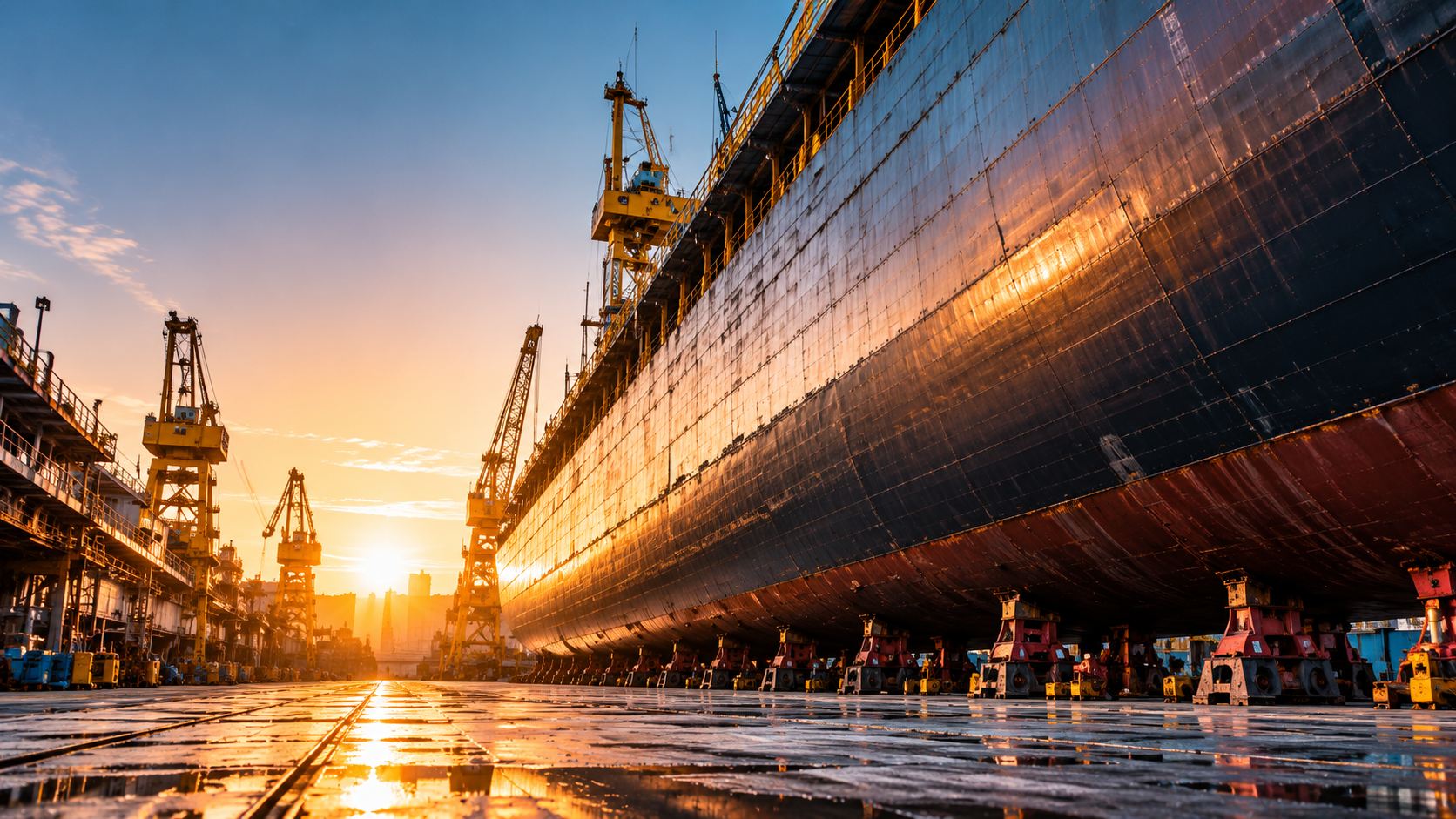
Gigantischer Schiffsrumpf im Sonnenuntergang

What ship building asks of a section

Material acceptance, corrosion and load that never switches off govern most decisions in a marine structure. The first of them is not a property of the steel at all.

Acceptance runs through class

Hull structural steel is defined by the rules of the classification society, not by the structural steel standards on their own. IACS UR W11 sets the normal strength grades A, B, D and E and the higher strength AH, DH and EH qualities at strength levels 32, 36 and 40, and it applies to plates, wide flats, sections and bars. The steelworks itself has to be approved by the society for the type and grade it supplies, and the material is certified under the society's survey. On a marine enquiry the first question is therefore which document the part has to carry, not which section fits.

Salt, spray and standing water

A marine atmosphere sits at the top of the corrosivity scale. EN ISO 12944-2 places coastal exposure in category C5 and offshore exposure in CX, with immersed parts in Im2, or Im4 where cathodic protection is applied. A closed section has less area to protect than an open one and no re-entrant corners where salt water and dirt stand. Hot dip galvanising to EN ISO 1461 needs filling and venting openings, which can be cut on the laser in the same operation as the connection geometry. Where coating maintenance is not practical, stainless takes over.

Motion below, weight counted above

A hull works in a seaway for as long as the vessel is underway, and machinery and propeller excitation put vibration on top of the wave induced motion. Welded details, not member cross sections, usually decide how that is survived. At the same time every kilogram added high up is weight the naval architect carries in the stability calculation and takes off the deadweight. A closed section answers both sides: torsional stiffness an open section cannot reach at the same outside dimension, and structural values that rise without the envelope growing.

The range we supply

Hollow sections and tubes in various grades and cross sections, including rectangular, square, round, oval and semi-oval.

Cold formed sections (EN 10219) are ideal for railing, guard and support structures, while hot finished sections (EN 10210) offer enhanced performance under dynamic loads, low temperatures and higher wall thicknesses.

Certified materials for classification requirements, special grades and non-standard dimensions are available on request.

Our steel trading products
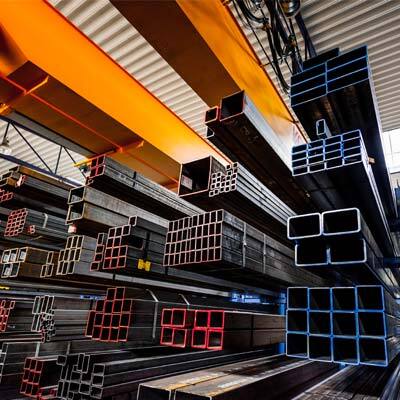
Hot Formed Hollow Sections
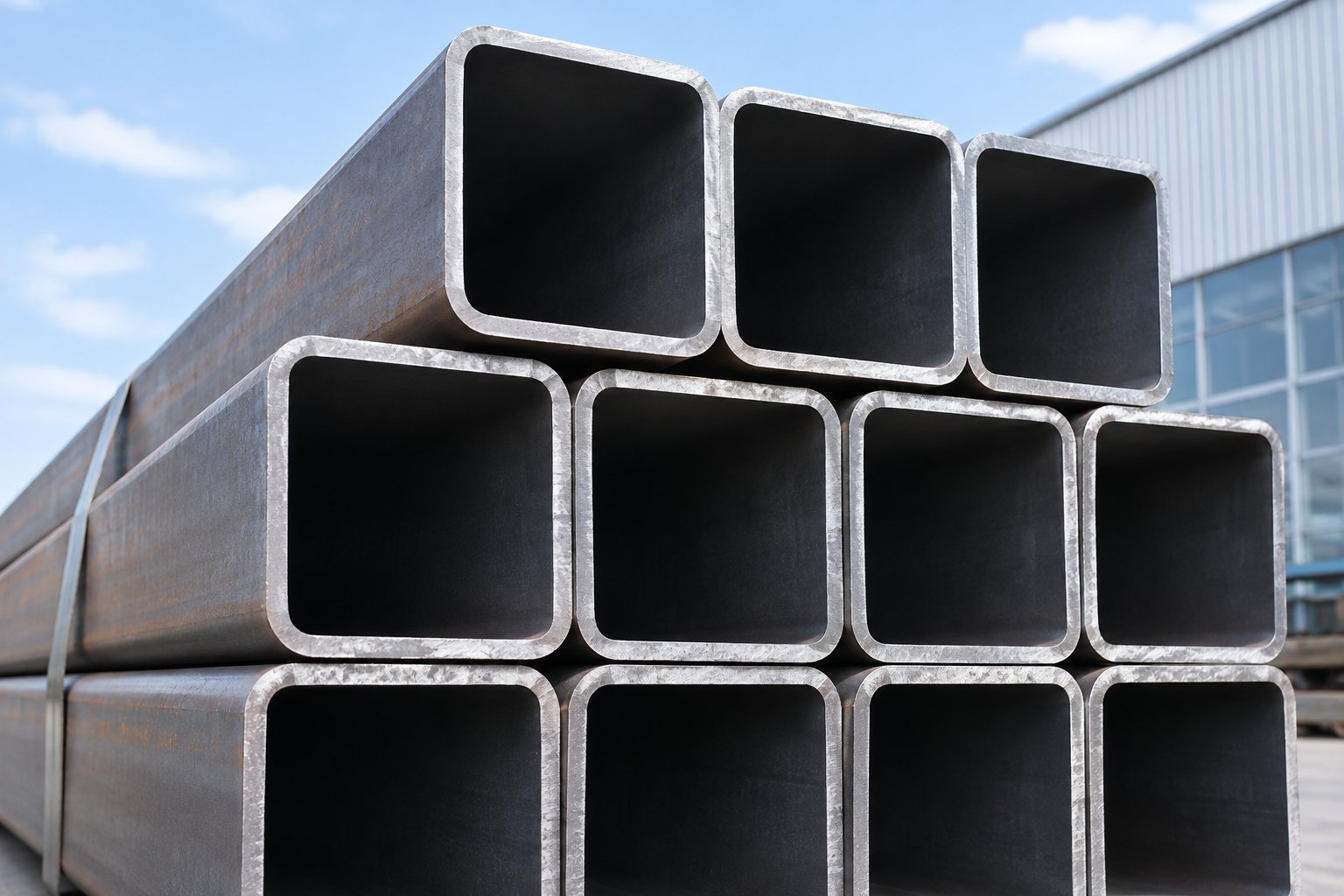
Hot Formed Hollow Sections

Cold Formed Hollow Sections
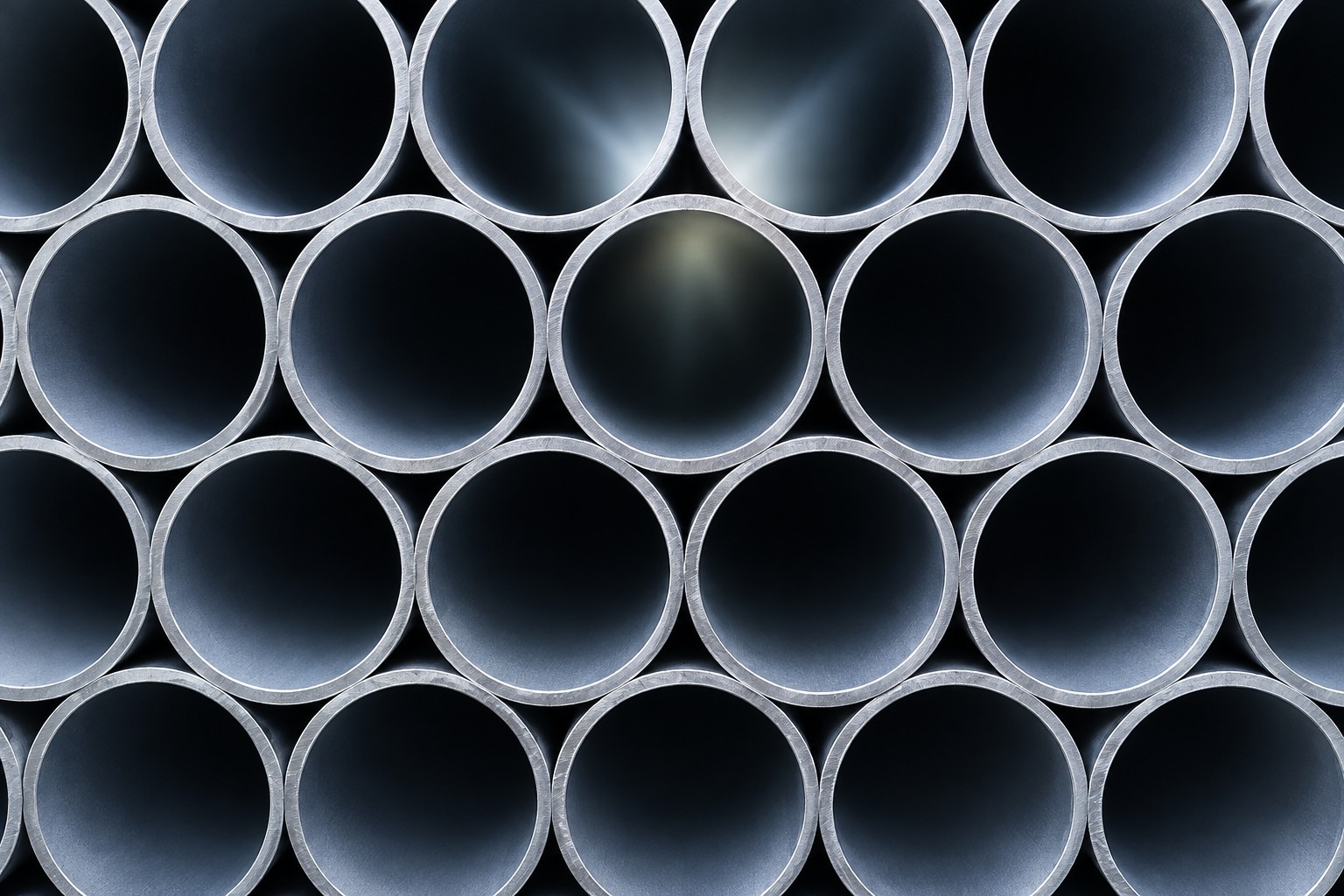
Cold Formed Hollow Sections

Seamless Tubes
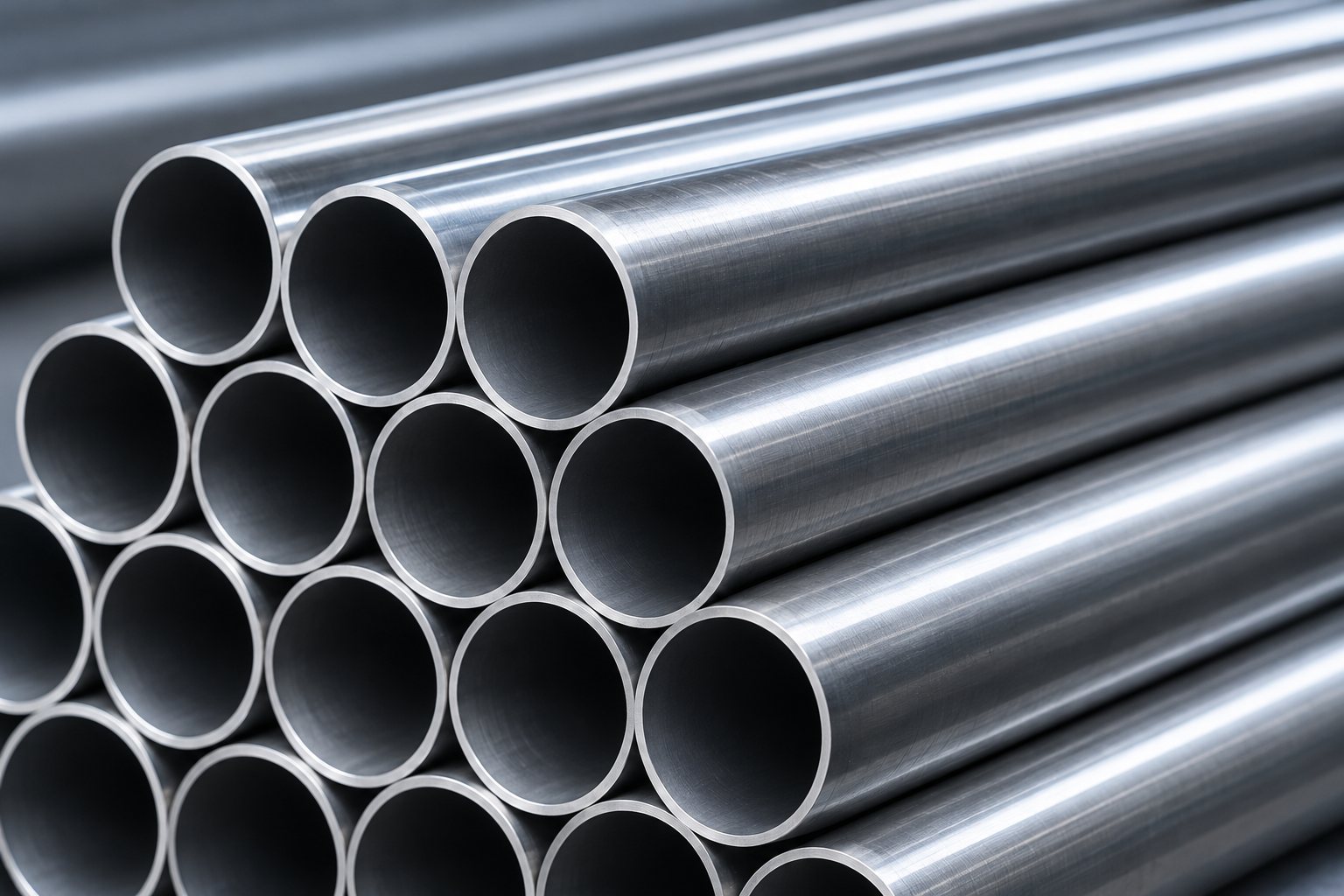
Seamless Tubes

Precision tubes

Precision tubes

Hollow sections to EN 10210 and EN 10219

Square

15 x 15 mm to 500 x 500 mm; EN 10210 hot finished up to 400 x 400 mm with wall thicknesses up to 20 mm, EN 10219 cold formed up to 300 x 300 mm with wall thicknesses up to 12.5 mm

Rectangular

15 x 10 mm to 600 x 400 mm; EN 10210 hot finished up to 500 x 300 mm with wall thicknesses up to 20 mm, EN 10219 cold formed up to 400 x 200 mm with wall thicknesses up to 12.5 mm

Shaped tubes

EN 10219 up to 120/80 and 100/100, wall thicknesses up to 5 mm, length 6,000 mm

Grades

S235JRH, S275J2H, S355J2H, S355NH, S420NH, S460NH, stainless steel and various special grades

Stock programme

Cold formed in S235JRH, S275J2H and S355J2H across the full dimension range; hot finished in S355J2H and S355NH

Availability

Stock range and delivery programme vary between markets. Your local ALUKÖNIGSTAHL team will confirm what is available for your project.

Services we offer

Very little on a ship is straight or square. A handrail follows the sheer, a stanchion foot meets a cambered deck, and a tube meets another tube at an angle that changes from one station to the next.

Bending

Cold bending, hot bending, rolling and press bending through our bending partners. This is the route to handrails that follow the sheer line, radiused guard structures, bow and stern railings and curved frames that would otherwise be segmented and welded together from straight pieces. Send the section, the radius and the tolerance and we will come back on what is feasible for that combination.

3D tube laser cutting

Copes for tube to tube joints, bolt holes, openings for cable and pipe routes, mounting positions and the filling and venting openings a galvanised section needs are cut into the member in one operation. Where a handrail meets a stanchion at an angle that changes along the run, the profile comes out of the model instead of being ground to fit by hand. That is where most of the fitting time in railing and guard work is lost.

Sawing and cutting to length

Fixed length cuts as well as single and double mitre cuts. Members arrive in the lengths your assembly needs, which simplifies handling in a crowded outfitting area and avoids costly offcuts in your own workshop.

Sandblasting

Removal of rust, scale, soiling and paint residues, so that the surface is prepared for the coating or galvanising step that follows. The surface preparation grade itself is set by the coating specification and follows EN ISO 12944.

Laser processing envelope

Hollow sections and open sections are processed continuously. The finished part lengths cover long railing runs, mast sections and continuous supports in one piece, without a splice.

Laser work is carried out in line with EN ISO 9001, EN 1090-2 and EN ISO 9013. These are the standards our processing works to. A vessel is not a construction work, so the conformity route of EN 1090-1 does not apply to it, and the fabrication framework for the ship itself is set by the rules of the classification society.

Fabrication under class survey stays with the yard, including welding procedure qualification and the approval of welding consumables under the society's rules. What we supply is the material and the preparatory operations agreed with it.

Sizing

Enveloping circle diameter up to 610 mm
Hollow sections and oval tubes up to 500 x 300 mm and 400 x 400 mm
Open sections up to 500 x 300 mm
Material thickness, steel up to 22 mm
Finished part length up to 14,000 mm
Weight up to 290 kg/m
File formats STEP, IGES and IFC for 3D model imports, plus DWG, DXF and PDF

For an enquiry, send a STEP file together with a PDF, DWG or DXF drawing. For simple parts a PDF is sufficient. Prefabrication services are available in selected markets.

Where these sections are used

Typical applications for hollow sections and tubes in ship building, outfitting and yard equipment. If your structure is not among them, the fastest route is a conversation with our steel team.

Railings, stanchions and guard structures

Deck railings, bulwark mounted rails and guard structures around openings and machinery, mostly galvanised or stainless and produced as repeat parts along a curved run.

Masts, posts and antenna structures

Signal masts, lighting and antenna posts and their bracing, where a closed section keeps the wind loaded envelope small and the surface simple to protect.

Gangways, ladders and access structures

Access platforms, stair and ladder structures and the frames that carry them, built in lengths that still have to be handled through a finished deckhouse.

Supports for piping, cable routes and outfitting

Support and hanger structures for pipe runs, cable trays and ducting, and framing for outfitting elements in engine rooms and service spaces.

Yard equipment, jigs and transport frames

Assembly and welding jigs, trestles, turning frames and transport structures used in block construction, where geometry changes from series to series.

Pontoons, floating equipment and quayside structures

Framing for pontoons, landing stages, gangway towers and fender and mooring structures on the quay, exposed to spray and to the splash zone.

Questions we are asked regularly

Projects we support

Our product portfolio serves a number of other sectors as well. The same hollow sections, tubes and prefabrication go into projects with quite different requirements, and each sector page sets out what matters there.

Get in touch with us

Send us the drawing, the parts list or a model. Our steel team will come back with the section, the grade and the prefabrication steps that suit your outfitting work, together with the inspection documents that can be supplied with them.