Alukönigstahl
Contact
AKS Login
Projects we support

Steel for plant and steel construction

A load bearing structure is judged twice. Once by the structural analysis, which decides whether the section carries what it has to carry, and once on site, where the same section has to arrive in the right length, join cleanly at the node and take its corrosion protection without rework.

We supply hollow sections and tubes for structural steelwork and plant engineering, together with the cutting, laser processing and bending that take fabrication steps out of your own workshop.

Monumentale Industrieanlage im Abendlicht

What a load bearing structure asks of a section

Columns, trusses and frame structures are governed by stability, by the joint and by the surface that has to last for the design life of the building. Three requirements decide most material selections.

Resistance in compression

A column is rarely limited by cross section area alone, but by buckling. A closed section carries compression efficiently about both axes, and EN 1993-1-1 assigns hot finished hollow sections a more favourable buckling curve than cold formed ones. At the same nominal dimension, that means a higher design buckling resistance.

Node connections and welding

Straight side faces and a consistent corner geometry make welded nodes predictable to detail and quick to fabricate; the design of joints between hollow sections is covered by EN 1993-1-8. Hot finished sections have no work hardening in the corner areas, a known cause of cracking, so they can be welded and hot dip galvanised without special precautions.

Columns that do more than carry load

Hollow section columns can be filled with concrete, which raises the load bearing capacity and improves the behaviour of the column in fire. The fire design of concrete filled composite columns is covered by EN 1994-1-2. Narrow face widths keep the column slender and leave usable floor area around it.

The range we supply

Hollow sections and tubes in structural and high-strength grades, available in rectangular, square, round, oval and semi-oval profiles. Cold formed sections suit standard steel construction and engineering, while hot finished sections meet higher demands for load, temperature and wall thickness.

Elliptical and semi-oval sections offer up to 55% higher bending strength with a 32% narrower face width, making them ideal for exposed structures, glass roofs and trusses.

Special grades and non-standard dimensions are available on request.

Our steel trading products
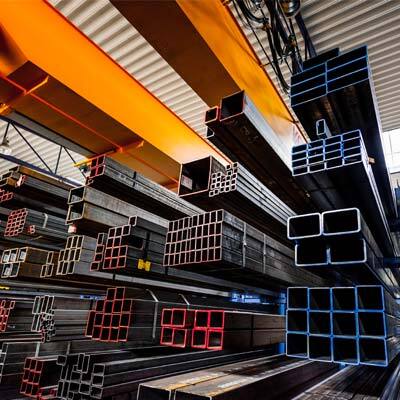
Hot Formed Hollow Sections
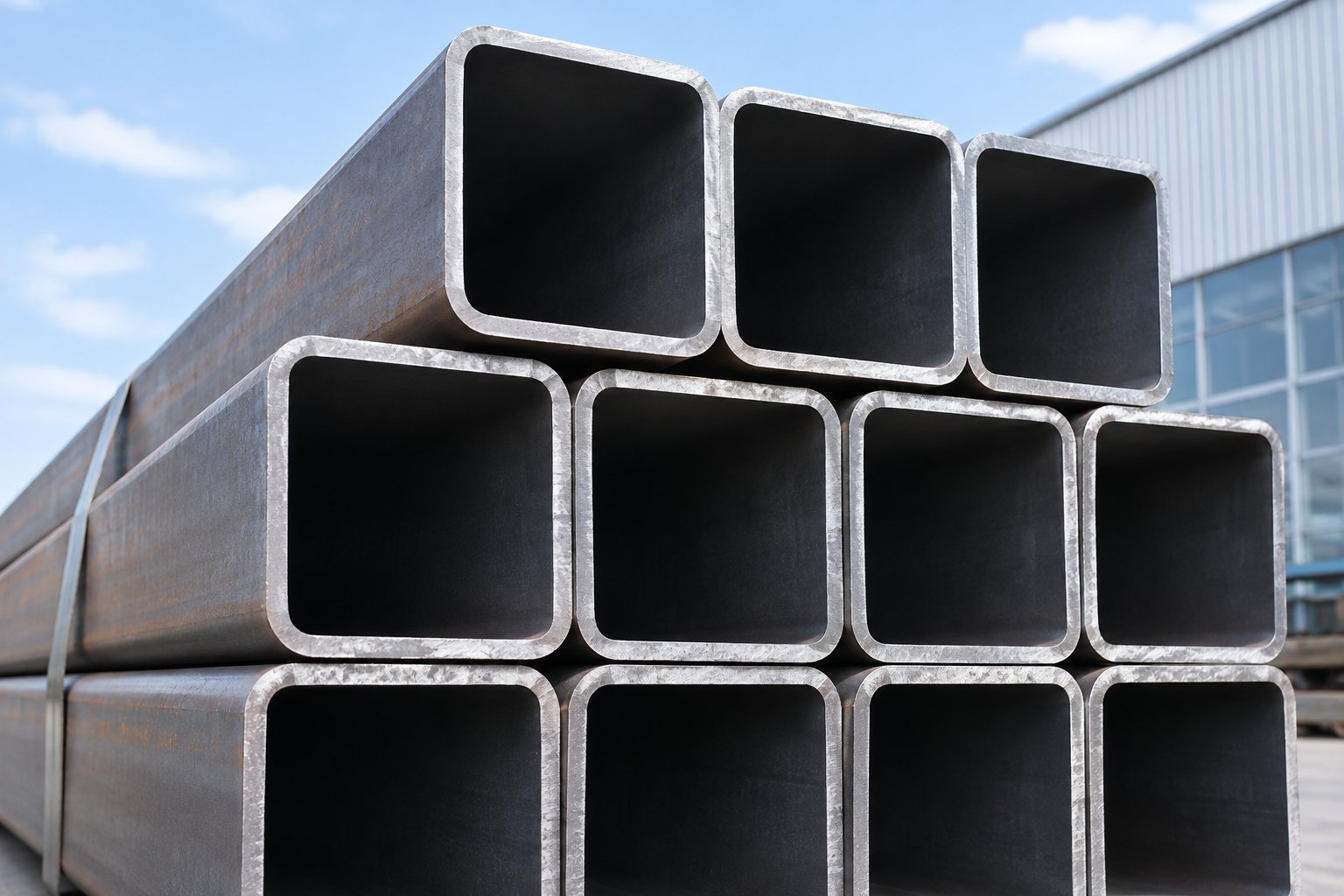
Hot Formed Hollow Sections

Cold Formed Hollow Sections
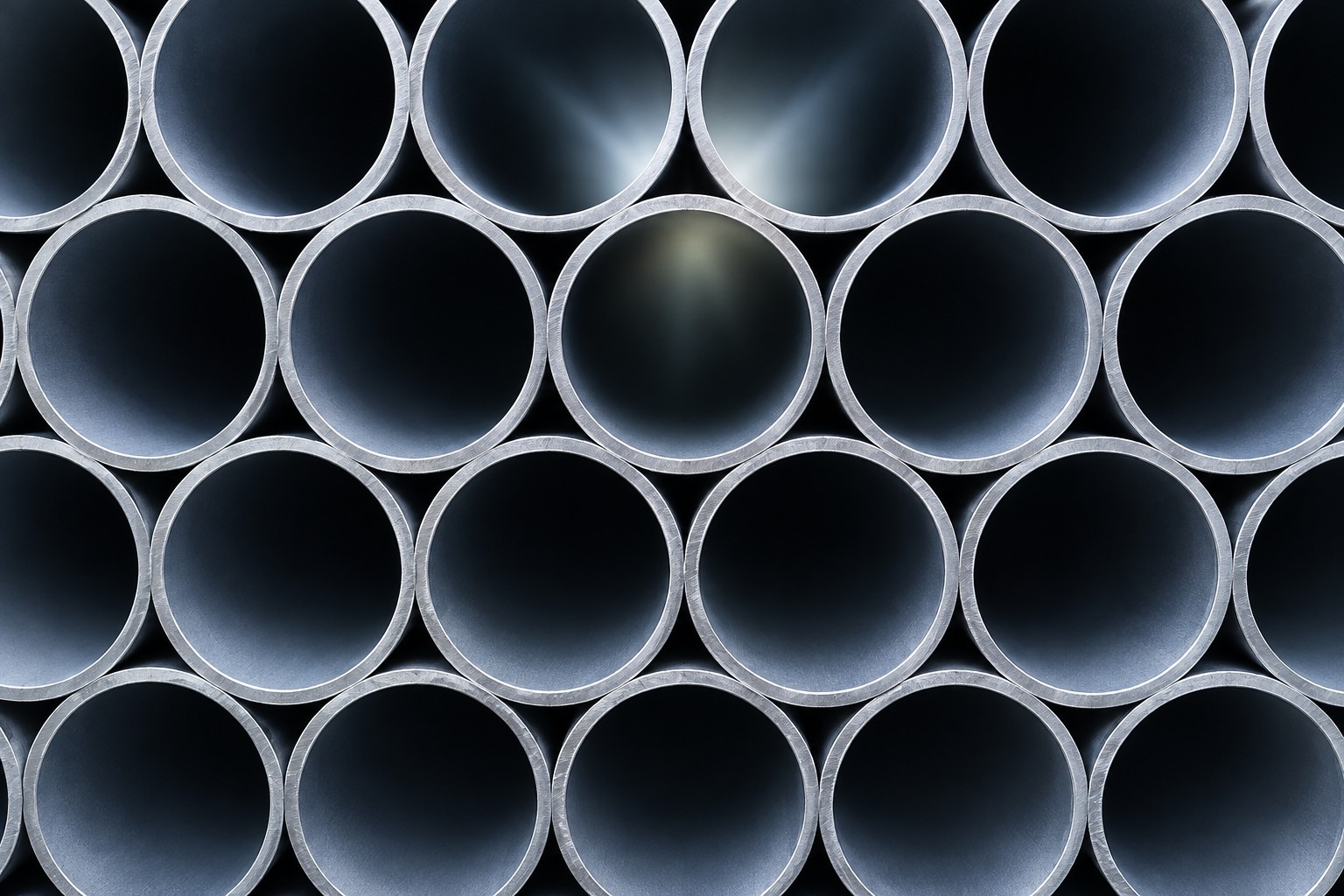
Cold Formed Hollow Sections

Seamless Tubes
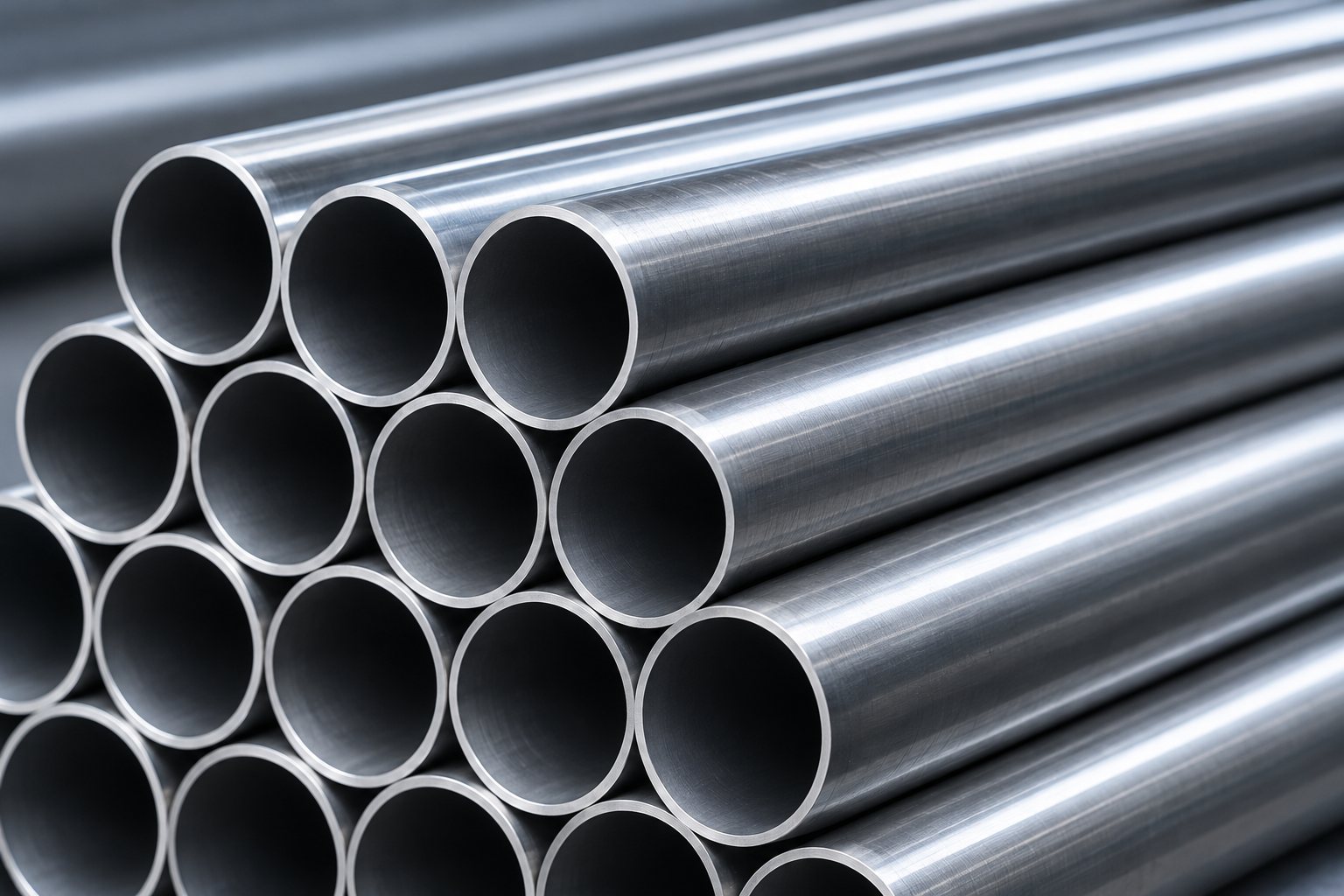
Seamless Tubes

Precision tubes

Precision tubes

Hollow sections to EN 10210 and EN 10219

Square

15 x 15 mm to 500 x 500 mm; EN 10210 hot finished up to 400 x 400 mm with wall thicknesses up to 20 mm, EN 10219 cold formed up to 300 x 300 mm with wall thicknesses up to 12.5 mm

Rectangular

15 x 10 mm to 600 x 400 mm; EN 10210 hot finished up to 500 x 300 mm with wall thicknesses up to 20 mm, EN 10219 cold formed up to 400 x 200 mm with wall thicknesses up to 12.5 mm

Shaped tubes

EN 10219 up to 120/80 and 100/100, wall thicknesses up to 5 mm, length 6,000 mm

Grades

S235JRH, S275J2H, S355J2H, S355NH, S420NH, S460NH, stainless steel and various special grades

Stock programme

Cold formed in S235JRH, S275J2H and S355J2H across the full dimension range; hot finished in S355J2H and S355NH

Availability

Stock range and delivery programme vary between markets. Your local ALUKÖNIGSTAHL team will confirm what is available for your project.

Services we offer

Steel that arrives cut to length, mitred, coped and blasted goes straight into the jig. Every operation you do not have to carry out yourself shortens the time between delivery and erection.

Bending

Cold and hot bending, rolling and press bending through our bending partners. This is the route to curved chords, arched roof members, stair stringers and canopy structures that would otherwise have to be segmented and welded from straight pieces.

3D tube laser cutting

Node geometries, copes, openings, bolt holes and mounting aids are cut into the section in one operation. That removes steps from your own production, gives optimised weld edges for better weld quality, and adds positioning aids that improve fit accuracy when the frame is assembled.

Sawing and cutting to length

Fixed length cuts as well as single and double mitre cuts. Members arrive in the lengths your assembly needs, which simplifies handling on site and avoids costly offcuts in your own workshop.

Sandblasting

Removal of rust, scale, soiling and paint residues, so that the surface is prepared for the coating or galvanising step that follows.

Laser processing envelope

Hollow sections and open sections are processed continuously. The finished part lengths cover most column and truss members in one piece, without a splice.

Laser work is carried out in line with EN ISO 9001, EN 1090-2 and EN ISO 9013.

Sizing

Enveloping circle diameter up to 610 mm
Hollow sections and oval tubes up to 500 x 300 mm and 400 x 400 mm
Open sections up to 500 x 300 mm
Material thickness, steel up to 22 mm
Finished part length up to 14,000 mm
Weight up to 290 kg/m
File formats STEP, IGES and IFC for 3D model imports, plus DWG, DXF and PDF

For an enquiry, send a STEP file together with a PDF, DWG or DXF drawing. For simple parts a PDF is sufficient. Prefabrication services are available in selected markets.

Where these sections are used

Typical applications in structural steelwork and plant engineering. If your structure is not among them, the fastest route is a conversation with our steel team.

Columns and supporting structures

Single storey and multi storey columns where buckling resistance, face width and the connection detail decide the section.

Trusses and lattice girders

Chords and diagonals with welded nodes, where consistent corner geometry keeps the joint detail repeatable.

Hall and industrial structures

Frame and portal structures, purlins, bracing and secondary steelwork in production and logistics buildings.

Facade substructures and glass roofs

Supporting structures behind the building envelope, including exposed sections where the visible face width matters.

Pipe racks and plant platforms

Supporting structures, walkways, platforms and equipment frames in process and industrial plants.

Stairs, walkways and balustrades

Stringers, handrail members and infill structures, often with bent members and a high share of repeat parts.

Questions we are asked regularly

Projects we support

Our product portfolio serves a number of other sectors as well. The same hollow sections, tubes and prefabrication go into projects with quite different requirements, and each sector page sets out what matters there.

Get in touch with us

Send us your structural drawings or a model and our steel team will come back with the section, the grade and the prefabrication steps that suit your fabrication and your site programme. On request we will assess the potential of 3D laser processing directly at your site.