
Steel for bridge construction
We supply hollow sections and tubes in structural and fine grain grades, together with the bending, cutting and laser processing that bring members to the geometry a bridge detail needs.

.png)
What a bridge asks of a section
Fatigue, toughness and corrosion protection govern most material decisions in bridge steelwork. Each of them points at a property of the section rather than at its cross section area.
Fatigue before static resistance
Traffic loads a bridge repeatedly, so members and joints are verified against a load spectrum. EN 1993-2 sets the design rules for steel bridges and refers the fatigue verification to EN 1993-1-9, where every weld detail carries its own detail category. In a lattice structure the joint usually governs before the member does, which is why corner geometry and weld preparation matter as much as the section table.
Toughness at the design temperature
Sub grade selection follows EN 1993-1-10, which starts from a reference temperature and returns a maximum permitted thickness for a given grade. The degree of cold forming enters that calculation as an adjustment, so a cold formed corner can push the requirement towards a tougher sub grade or a thinner permitted section. That is the main reason hot finished sections to EN 10210 dominate in bridge steelwork.
A surface that is protected once
A closed section has less area to coat than an open one and no re-entrant corners that hold water. Coating systems follow EN ISO 12944 with the corrosivity category taken from the exposure, and hot dip galvanising follows EN ISO 1461. Hot finished sections carry no work hardening in the corner areas, a known cause of cracking, so they can be welded and galvanised without special precautions.
The range we supply
Hollow sections and tubes in rectangular, square, round, oval and semi-oval profiles. Cold formed sections to EN 10219 suit standard steel construction, while hot finished sections to EN 10210 meet higher demands for load, temperature and wall thickness.
Fine grain grades S355NH, S420NH and S460NH are available alongside J2H qualities. Elliptical and semi-oval sections offer additional design flexibility, particularly for exposed structures.
Special grades, including L qualities for -50 °C impact requirements, and non-standard dimensions are available on request.
Our steel trading products
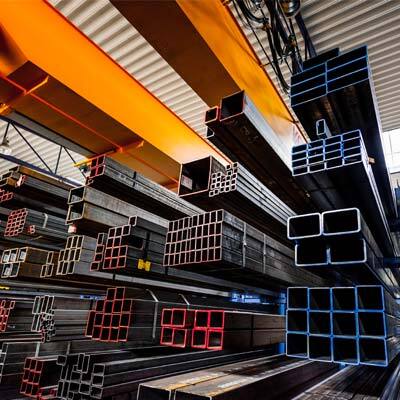
Hot Formed Hollow Sections
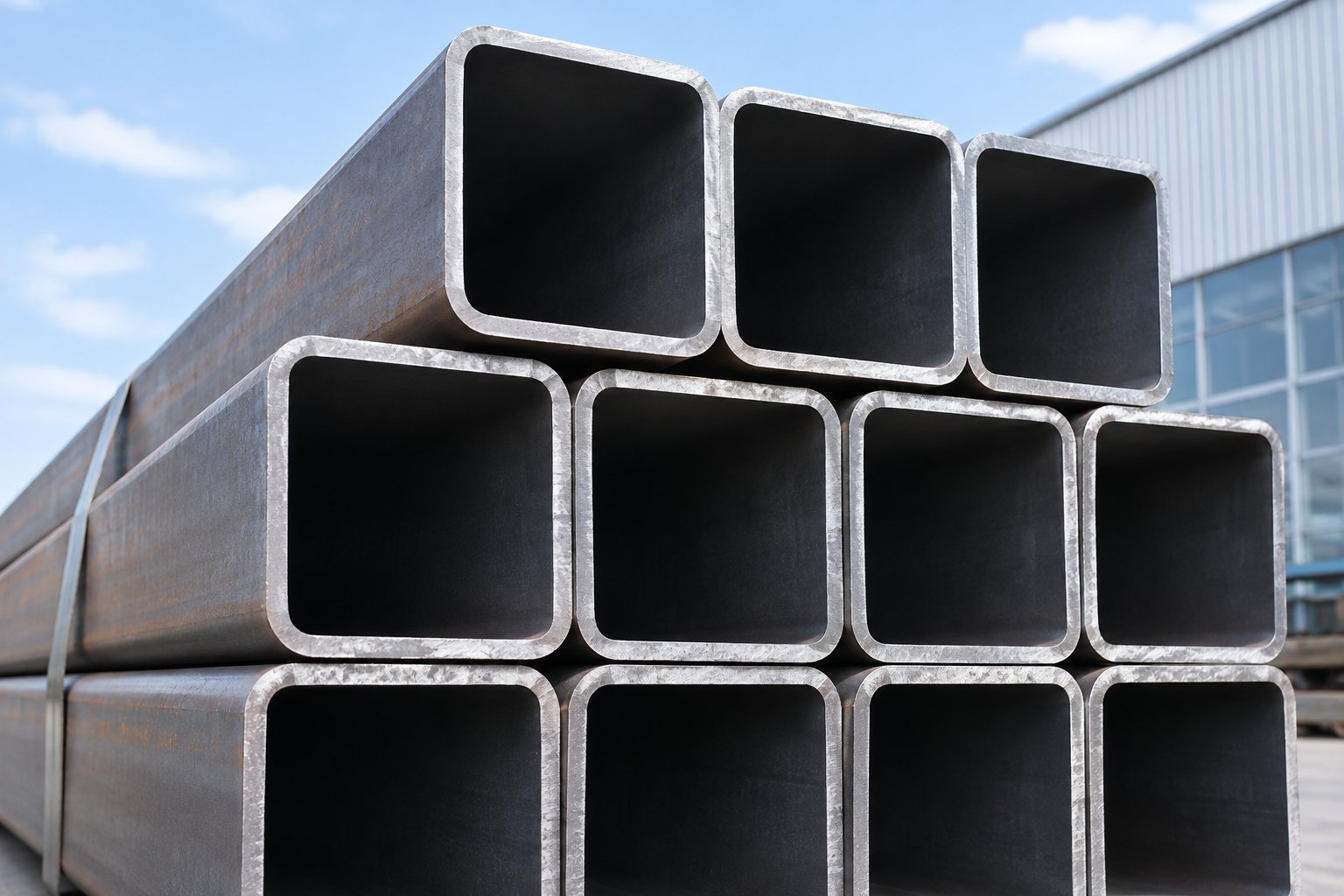
Cold Formed Hollow Sections
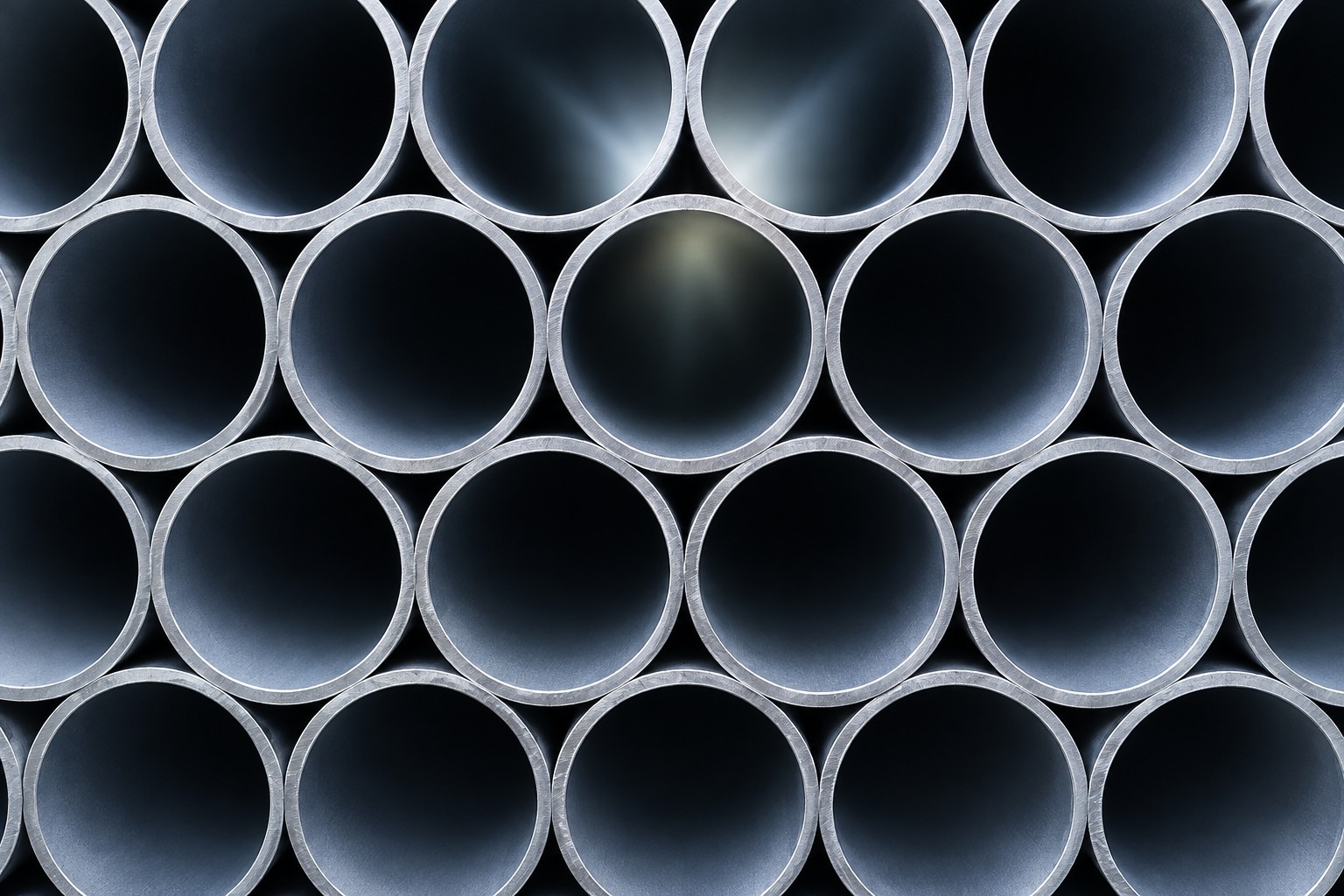
Seamless Tubes
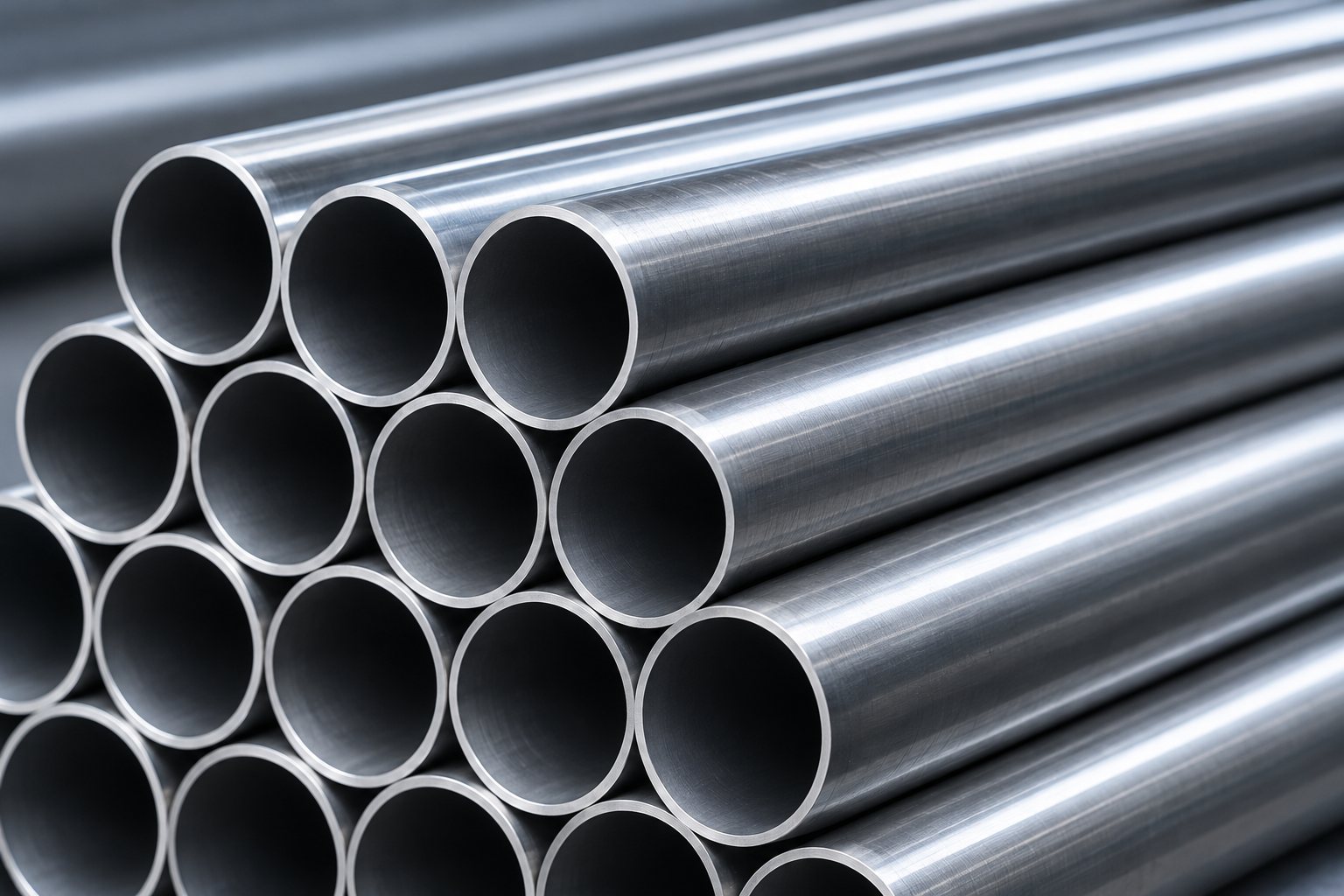
Precision tubes

Hollow sections to EN 10210 and EN 10219
Square
15 x 15 mm to 500 x 500 mm; EN 10210 hot finished up to 400 x 400 mm with wall thicknesses up to 20 mm, EN 10219 cold formed up to 300 x 300 mm with wall thicknesses up to 12.5 mm
Rectangular
15 x 10 mm to 600 x 400 mm; EN 10210 hot finished up to 500 x 300 mm with wall thicknesses up to 20 mm, EN 10219 cold formed up to 400 x 200 mm with wall thicknesses up to 12.5 mm
Shaped tubes
EN 10219 up to 120/80 and 100/100, wall thicknesses up to 5 mm, length 6,000 mm
Grades
S235JRH, S275J2H, S355J2H, S355NH, S420NH, S460NH, stainless steel and various special grades
Sub grade designations
JR at room temperature, J0 at 0 °C, J2 and K2 at -20 °C, N for normalized fine grain steels, L for specified impact properties at -50 °C
Stock programme
Hot finished in S355J2H and S355NH; cold formed in S235JRH, S275J2H and S355J2H
Stock range and delivery programme
Stock range and delivery programme vary between markets. Your local ALUKÖNIGSTAHL team will confirm what is available for your project. The programme covers hollow sections, tubes and rolled steel. Bridge equipment such as bearings, expansion joints and drainage is not part of it.
Services we offer
Bridge members are rarely straight and rarely simple. Curved chords, mitred nodes and cope geometries are work that can happen before the steel reaches your workshop.
Bending
Cold bending, hot bending, rolling and press bending through our bending partners. Bridge construction is one of the fields these partners work in, alongside structural steelwork, high rise steel construction and stair construction. This is the route to arched chords, curved parapets and radiused members that would otherwise be segmented and welded from straight pieces. Send the radius, the section and the tolerance and we will come back on what is feasible for that combination.
3D tube laser cutting
Node geometries, copes, openings, bolt holes and mounting aids are cut into the section in one operation. That removes steps from your own production, gives optimised weld edges and adds positioning aids that improve fit accuracy during assembly. Weld quality is not a cosmetic point in a fatigue governed structure: the detail categories in EN 1993-1-9 assume a level of workmanship, and the execution class set for the project defines it.
Sawing and cutting to length
Fixed length cuts as well as single and double mitre cuts. Members arrive in the lengths your assembly needs, which simplifies handling on site and avoids costly offcuts in your own workshop.
Sandblasting
Removal of rust, scale, soiling and paint residues, so that the surface is prepared for the coating or galvanising step that follows. The surface preparation grade itself is set by the coating specification and follows EN ISO 12944.
Laser processing envelope
Laser work is carried out in line with EN ISO 9001, EN 1090-2 and EN ISO 9013.
Fabrication of the bridge structure itself, including the execution class set for the project under EN 1090-2, stays with your workshop. What we supply is the material and the preparatory operations agreed with it.
Sizing
Hollow sections and oval tubes up to 500 x 300 mm and 400 x 400 mm
Open sections up to 500 x 300 mm
Material thickness, steel up to 22 mm
Finished part length up to 14,000 mm
Weight up to 290 kg/m
File formats STEP, IGES and IFC for 3D model imports, plus DWG, DXF and PDF
For an enquiry, send a STEP file together with a PDF, DWG or DXF drawing. For simple parts a PDF is sufficient. Prefabrication services are available in selected markets.
Where these sections are used
Typical applications for hollow sections and tubes in bridge structures. If your structure is not among them, the fastest route is a conversation with our steel team.
Footbridges and cycle bridges
Trusses, arches and closed frame structures seen from close range, where the visible face width is part of the design.
Truss and lattice girder bridges
Chords, diagonals and verticals with welded joints, detailed to EN 1993-1-8 and verified for fatigue on the joint rather than the member.
Arch bridges and hangers
Arch ribs, wind bracing between the arches and hanger members. EN 1993-2 includes provisions for hangers on tied arch bridges.
Parapets, railings and edge details
Posts, handrail members and infill structures, frequently curved and produced as repeat parts.
Bracing, cross frames and secondary members
Wind bracing and cross frames, where the connection to the main girder introduces a fatigue detail of its own.
Pipe bridges, conveyor bridges and temporary structures
Crossings in plant and infrastructure, plus falsework and site access structures where the geometry changes from project to project.
Questions we are asked regularly
Projects we support
Our product portfolio serves a number of other sectors as well. The same hollow sections, tubes and prefabrication go into projects with quite different requirements, and each sector page sets out what matters there.
AGRICULTURAL ENGINEERING
Equipment and machinery structures in outdoor use, with a high share of repeat parts.
METAL CONSTRUCTION
Fabrication work from balustrades and canopies through to individual steel structures.

Get in touch with us
Send us the member schedule, the drawings or a model. Our steel team will come back with the section, the grade and the sub grade that match your verification, together with the bending and prefabrication steps that fit your workshop and your erection programme.